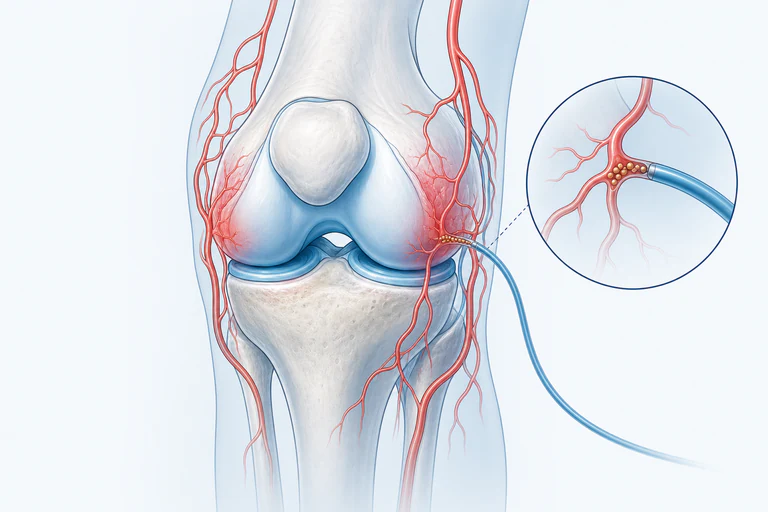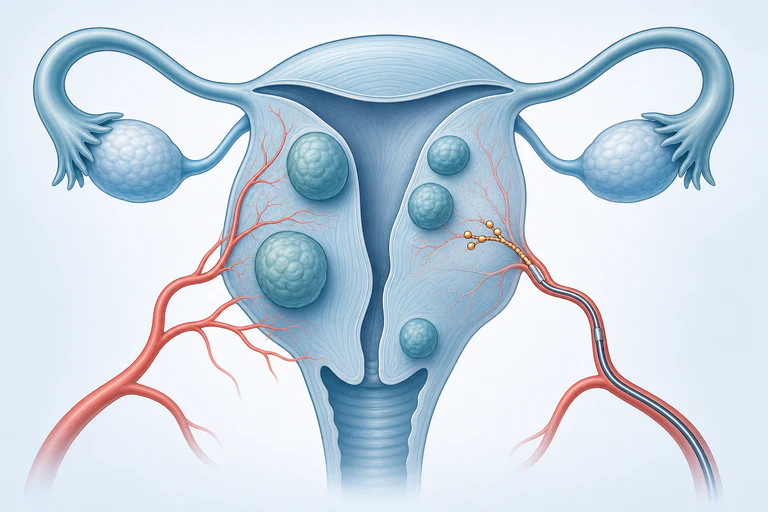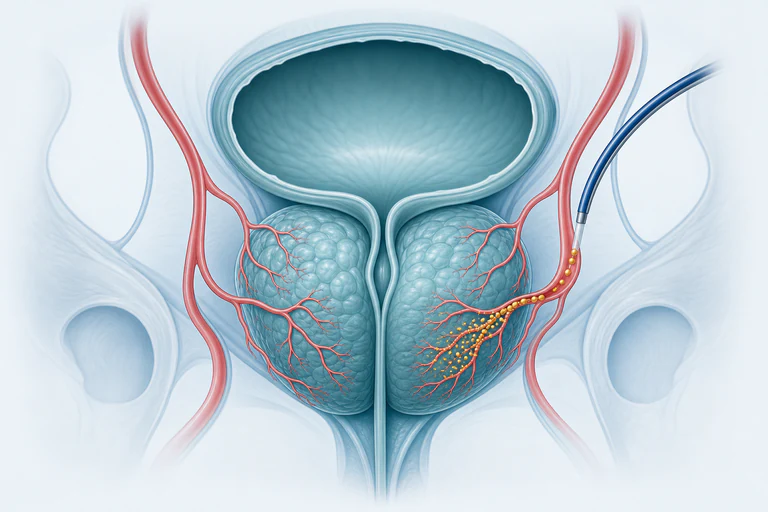
These general answers are a starting point. Your exact experience depends on the procedure, anatomy, medical history, and individualized plan.
Is embolization considered surgery?
Embolization is a minimally invasive, image-guided procedure performed through a small arterial access point, usually at the wrist or groin. It does not require a large surgical incision, but it is still a medical procedure with preparation, monitoring, risks, and recovery instructions.
Will I be awake during the procedure?
Local anesthesia and intravenous medication for comfort are often used. The exact plan depends on the treatment, your medical history, and the clinical setting. Your team will review the anesthesia and sedation plan before treatment.
Does embolization hurt?
Patients generally receive medication to reduce discomfort at the catheter access site. Symptoms after treatment vary substantially: the typical experience after PAE, GAE, and UFE is not the same. A procedure-specific pain and recovery plan is reviewed in advance.
How long does the procedure take?
There is no single duration for every embolization. Timing depends on the procedure, anatomy, access route, and technical complexity. Your team will give you a more individualized estimate after reviewing your records and imaging.
Will I go home the same day?
Many patients are discharged after a period of monitored recovery. Observation or an overnight stay may sometimes be appropriate depending on the treatment, symptoms, medical history, and recovery plan.
When can I drive, work, exercise, or travel?
You will need transportation home after the procedure. Return to driving, work, exercise, lifting, and travel varies by treatment and by patient. Follow the written recovery instructions provided by your clinical team.
When should I expect improvement?
Results are usually gradual rather than immediate. The timing and degree of improvement differ among prostate symptoms, knee pain, and fibroid symptoms. Some patients have limited improvement or may later need another treatment.
What are the risks?
Possible effects include access-site bruising, temporary pain or inflammation, and treatment-specific symptoms. Less common complications can include bleeding, infection, contrast-related problems, injury to a vessel, or unintended embolization. Individual risks are reviewed before treatment.
Could I need another treatment later?
Yes. Symptoms may persist, return, or have more than one cause. Some patients need medication, repeat treatment, or another procedure later. Durability and alternatives should be part of the consultation.
Will insurance cover the procedure?
Coverage depends on your plan, diagnosis, medical necessity, prior authorization, and network rules. The office can verify benefits, but coverage does not guarantee that deductibles, copayments, or coinsurance will be zero.